





Should You Lease or Finance Your Next Chevy? A Buyer’s Guide
Choosing your next Chevrolet is only part of the buying process. You also have to decide whether leasing or financing makes more sense for the way you drive.
Both options have advantages. The right choice depends on how long you plan to keep your vehicle, how many miles you drive each year, and whether long-term ownership matters to you.
At Commonwealth Chevrolet in Lawrence, MA, we help drivers throughout the Merrimack Valley and Southern New Hampshire compare both options before choosing their next Chevy.
Leasing vs. Financing: What’s the Difference?
When you finance a Chevrolet, you’re purchasing the vehicle and making monthly payments toward ownership. Once the loan is paid off, the vehicle is yours.
When you lease a Chevrolet, you’re paying to use the vehicle for a set period of time and an agreed-upon mileage allowance. At the end of the lease, you may have the option to return it, purchase it, or move into another vehicle.
Neither option is automatically better. The right choice depends on your budget, driving habits, and long-term plans.
When Leasing a Chevy May Make Sense
Leasing can be a good fit for drivers who enjoy getting into a newer vehicle every few years.
Leasing may make sense if you:
- Prefer newer technology, safety features, and styling
- Drive a predictable number of miles each year
- Like changing vehicles every few years
- Don’t necessarily want to own the vehicle long-term
Leasing can also provide flexibility if your vehicle needs are likely to change. The Chevy that fits your lifestyle today may not be the same vehicle you need several years from now.
Before choosing a lease, always review the mileage allowance, lease term, amount due at signing, and potential excess-mileage or wear charges.
You can also review our current Chevy lease and finance offers to see what programs are currently available.
When Financing a Chevy May Make More Sense
Financing is often the better fit for drivers who plan to keep their vehicle longer.
Financing may make sense if you:
- Want to eventually own your Chevy outright
- Drive a high number of miles each year
- Plan to keep your vehicle for several years
- Want more freedom to customize your vehicle
- Prefer having no lease mileage restrictions
For drivers with longer commutes throughout Massachusetts and Southern New Hampshire, annual mileage can be an especially important factor.
If financing sounds like the better fit for you, the Commonwealth Chevrolet Finance Department can help explain available financing options and the steps involved.
Is Leasing Always Cheaper Than Financing?
Not necessarily.
A lease may sometimes offer a lower monthly payment than financing the same vehicle, but the monthly payment is only one part of the decision.
When comparing leasing and financing, consider:
- Amount due at signing
- Monthly payment
- Length of the contract
- Annual mileage allowance
- Interest or finance rate
- Potential lease-end charges
- How long you plan to keep the vehicle
A lower monthly payment does not always mean a lower overall cost.
The better approach is to compare the complete terms of both options and decide which fits your budget and driving habits.
What If You Drive a Lot?
If you have a long daily commute or regularly travel throughout New England, financing may deserve stronger consideration.
Leases generally include an annual mileage allowance. Going over that allowance may result in additional charges at the end of the lease.
Financing does not include the same contractual mileage restriction.
Before signing a lease, estimate how many miles you realistically drive in a year. That can make the decision between leasing and financing much easier.
Leasing vs. Financing a Chevy SUV or Truck
The vehicle you choose can also influence your decision.
Someone driving a Chevy Trax or Equinox primarily for commuting may have very different needs than someone using a Silverado for work, towing, or high-mileage driving.
If you expect to put significant mileage on your vehicle or keep it for many years, financing may provide more flexibility.
If you prefer upgrading to a newer SUV or truck every few years and your annual mileage is predictable, leasing may still be a strong option.
You can browse our current new Chevrolet inventory to compare available Chevy cars, trucks, SUVs, and EVs.
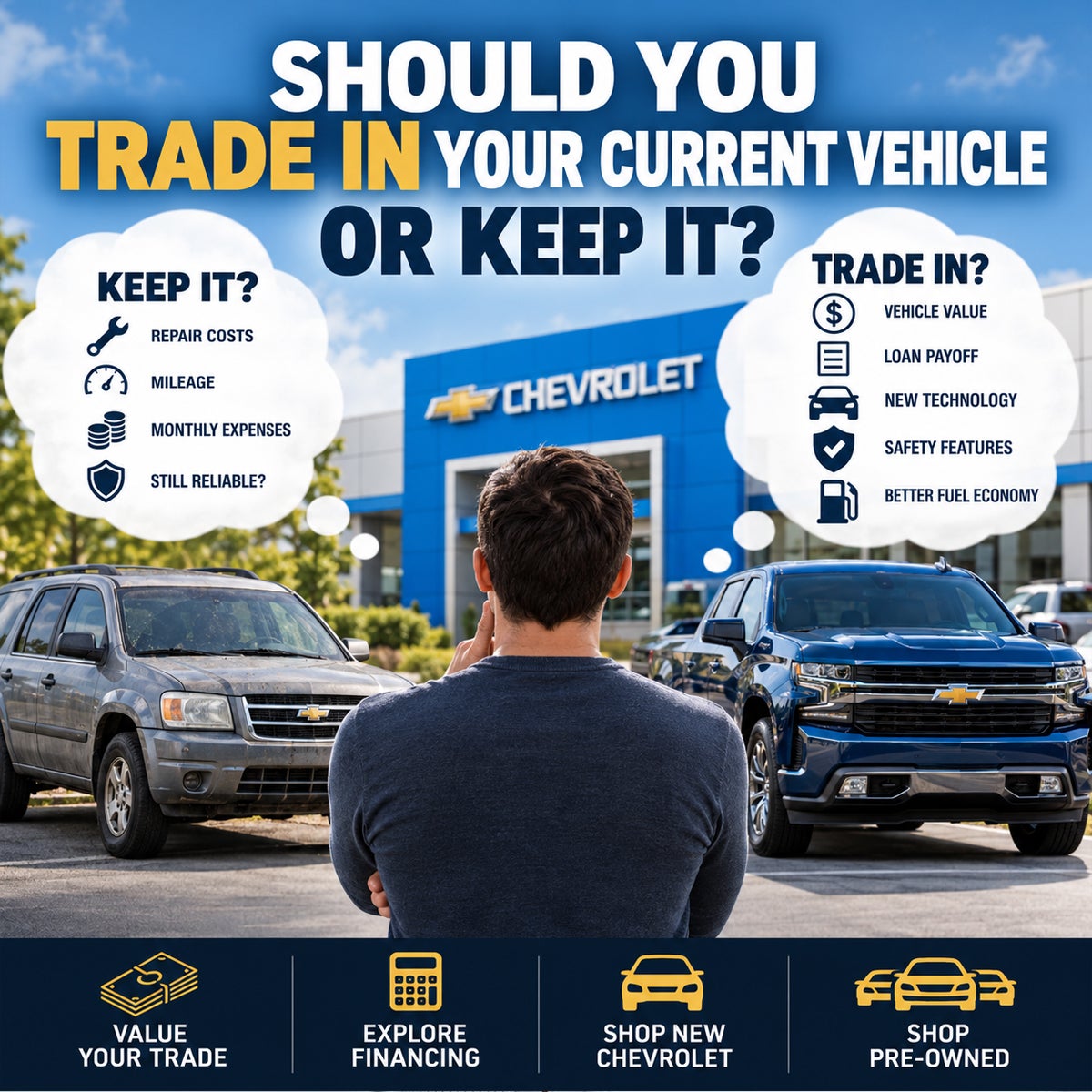
Can You Trade In Your Current Vehicle?
Yes.
If you currently own a vehicle, knowing what it may be worth can help you better understand your options before deciding whether to lease or finance your next Chevrolet.
If you have equity in your current vehicle, that may also affect how you structure your next transaction.
You can use our online Value Your Trade tool to get started before visiting the dealership.
So, Should You Lease or Finance Your Next Chevy?
It comes down to how you drive and what you want from your next vehicle.
Leasing may make more sense if you:
- Prefer driving a newer Chevrolet every few years
- Have predictable annual mileage
- Like upgrading to newer technology and features
- Don’t necessarily want long-term ownership
Financing may make more sense if you:
- Drive a lot of miles
- Plan to keep your vehicle for several years
- Want to eventually own your Chevy outright
- Prefer not to worry about lease mileage limits
The best choice isn’t simply the option with the lowest advertised monthly payment. It’s the option that works best with your budget, mileage, and long-term plans.
Compare Your Chevy Lease and Finance Options in Lawrence, MA
If you’re deciding whether to lease or finance your next Chevrolet, Commonwealth Chevrolet can help you compare both options and find a plan that fits the way you drive.
We proudly serve drivers from Lawrence, Methuen, Andover, Haverhill, throughout the Merrimack Valley, and Southern New Hampshire.
Whether you’re shopping for a Chevy SUV, truck, EV, or performance vehicle, understanding the differences between leasing and financing can help you make a more informed decision.
Shop Us Last… You’ll Love Us!
Frequently Asked Questions
Is it better to lease or finance a Chevy?
It depends on your driving habits and long-term plans. Leasing may be a better fit for drivers who prefer changing vehicles every few years, while financing may make more sense for drivers who want long-term ownership.
Does a Chevy lease have a mileage limit?
Most leases include an agreed-upon mileage allowance. Additional mileage may result in excess-mileage charges, so it’s important to understand your driving habits before choosing a lease.
Can I buy my Chevy at the end of the lease?
Many lease agreements include a purchase option at the end of the lease. The purchase price and terms will be listed in your specific lease agreement.
Is financing better for high-mileage drivers?
It can be. Financing does not include the same contractual mileage restrictions typically associated with leasing, which may make it more practical for drivers with long commutes or higher annual mileage.